Most SDR compensation plans are copied from a deck someone found online, tweaked until finance stops complaining, and then left untouched for a year. That is how you end up with reps who hit every activity number and still book nothing worth passing to an AE.
A compensation plan is not a payroll formula. It is the clearest signal you send about what the job actually is. If you comp on dials, you get dials. If you comp on qualified pipeline, you get reps who think before they send. Getting this right is one of the highest-leverage sales ops decisions you will make, and it costs nothing but attention.
Here is how to build a plan that pays for the outcomes you actually want.
Start With On-Target Earnings, Then Split It
Every plan starts from one number: on-target earnings (OTE). This is what a fully ramped rep hitting 100 percent of quota takes home in a year. For SDRs in most B2B markets, OTE lands somewhere between 60,000 and 90,000 dollars depending on region, seniority, and deal size, though enterprise-focused roles run higher.
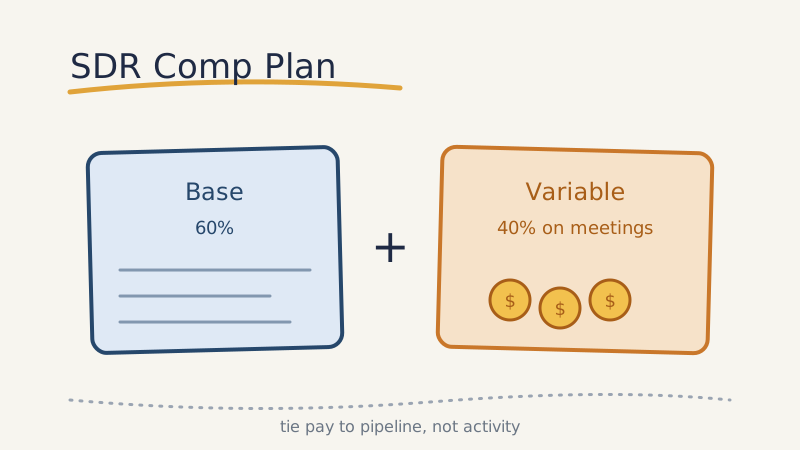
Once you have OTE, you split it into two buckets:
- Base salary: guaranteed pay, regardless of performance.
- Variable (commission): earned by hitting the metrics you comp on.
The industry-standard split for SDRs is roughly 60/40 to 70/30 in favor of base. So a 75,000 dollar OTE might be 48,000 base and 27,000 variable at a 64/36 split.
Why weight it toward base? SDR work is early in the funnel and heavily influenced by list quality, product-market fit, and market timing, factors the rep does not fully control. A rep on a 50/50 split feels every slow month in their paycheck and starts optimizing for whatever games the metric fastest. A stable base keeps good reps from churning during the normal noise of outbound.
Choose the Right Metric to Comp On
This is where most plans go wrong. The metric you attach variable pay to becomes the rep’s entire world. Pick carefully.
Do not comp on activity. Dials, emails sent, and connects are inputs, not outcomes. The moment you pay for volume, you get volume: sloppy sequences, spray-and-pray lists, and inboxes that get your domain flagged. Activity belongs in coaching conversations, not in the comp plan.
Comp on qualified meetings, and then on pipeline. The cleanest primary metric for an SDR is the qualified meeting or sales-accepted opportunity (SAO): a booked meeting that the AE agrees is a real fit and actually shows up. This forces quality, because a no-show or a junk lead does not count.
The strongest plans layer two components:
- Per-meeting or per-SAO commission: a flat amount for each qualified meeting that gets accepted. This is the bread-and-butter, paid monthly.
- Pipeline or bookings kicker: a smaller bonus tied to meetings that convert into real pipeline dollars or closed revenue downstream. This aligns the SDR with the AE instead of letting them dump weak leads over the wall.
If you only pay on meetings booked, reps optimize for volume of meetings. If you add the downstream kicker, they start caring whether the meeting was any good. That single design choice is the difference between a handoff your AEs trust and one they quietly ignore. We wrote more about protecting that handoff in our guide to the SDR to AE handoff process.
Set Quota Before You Set Commission
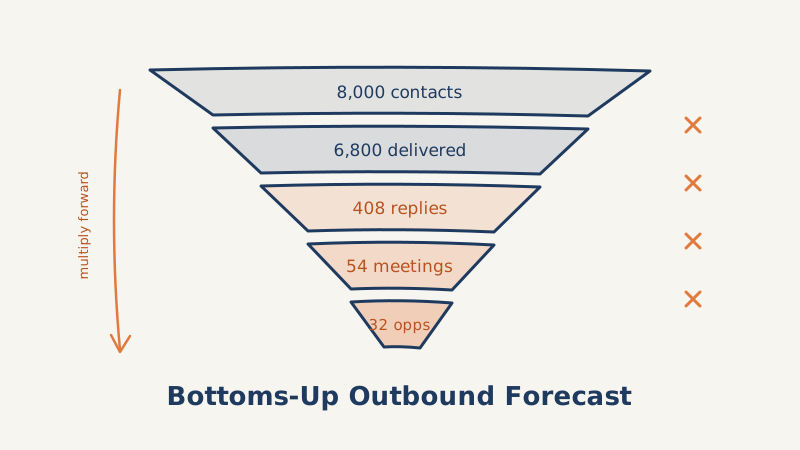
You cannot price a meeting until you know how many a rep should book. Work backward from your pipeline target:
- Take the pipeline number the SDR team needs to source this quarter.
- Divide by average deal size to get opportunities needed.
- Apply your meeting-to-opportunity conversion rate to get qualified meetings needed.
- Divide across ramped reps and months to get a monthly quota per rep.
A common ramped SDR quota is 12 to 20 qualified meetings per month, but the right number is specific to your motion. Once you have quota, per-meeting commission is simply the variable portion of OTE divided by annual quota. If a rep should earn 27,000 dollars in variable at 180 meetings a year, each accepted meeting is worth 150 dollars.
If you have not built quotas from a pipeline model yet, start with our breakdown of how to set SDR quotas that drive pipeline before you touch the comp math.
Add Accelerators, Skip the Cliffs
Two design details separate a plan that motivates from one that demoralizes.
Use accelerators above 100 percent. Once a rep blows past quota, pay them more per meeting, not less. An accelerator (for example, 1.5x commission on every meeting above 100 percent of quota) rewards your best reps for doing the thing you most want: overperforming. Capping commission is the fastest way to teach your top rep to sandbag the last week of the month.
Avoid steep cliffs. A cliff is a threshold where a rep earns nothing until they cross it, then suddenly earns a lump. Cliffs create perverse incentives: a rep at 40 percent of quota mid-month may give up entirely because the next dollar feels out of reach. Prefer linear commission from the first meeting, with accelerators layered on top.
Pressure-Test the Plan Before You Ship It
Before rolling it out, model three scenarios in a spreadsheet:
- The underperformer at 50 percent of quota. Do they earn enough to stay motivated but feel the miss? If a rep at half quota still earns near full variable, your leverage is too weak.
- The on-target rep at 100 percent. Do they hit OTE exactly? If not, your math is broken.
- The overperformer at 150 percent. Are you happy to pay that number? If the accelerator makes finance nervous, that is usually a sign the plan is working, not that it is broken.
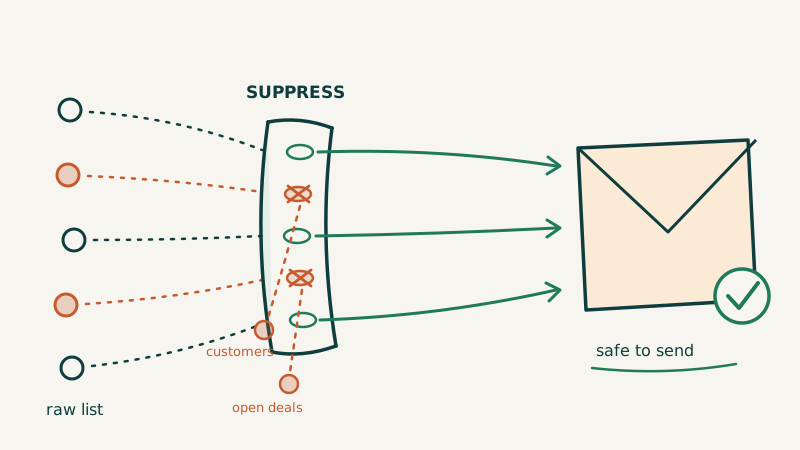
Also sanity-check the plan against data quality. A comp plan that pays per accepted meeting quietly assumes your lists are clean and your sends land in the inbox. If half your outbound bounces or hits spam traps, reps get punished for infrastructure problems that are not their fault. Validating your contact data with a tool like Scrubby before reps ever start dialing keeps the plan fair and keeps your sender reputation intact.
When the Plan Itself Is the Problem
Sometimes you build the plan three times and pipeline still does not move. That is usually not a comp problem. It is a signal that standing up an in-house SDR function, with the hiring, ramp, tooling, management, and yes, the comp design, is a bigger lift than the pipeline goal justifies right now.
Every hour spent modeling accelerators is an hour not spent selling. For many teams, especially those pre-Series A or running lean, the faster path to pipeline is to skip plan design entirely and buy the outcome. That is the core idea behind outsourced GTM infrastructure: a partner absorbs the SDRs, the tooling, and the comp math, and you pay for booked meetings instead of managing a variable-pay spreadsheet. If you want to see how the build-versus-buy math actually breaks down, our comparison of when to outsource outbound versus building an in-house SDR team walks through it.
Whichever path you choose, the principle holds: pay for pipeline, not for motion. The plan is not a cost to minimize. It is the loudest instruction you give your team every single day, so make sure it is telling them to do the right thing.
Ready to skip the comp-plan spreadsheet and just get meetings on the calendar? See how Vendisys builds outbound pipeline for you.