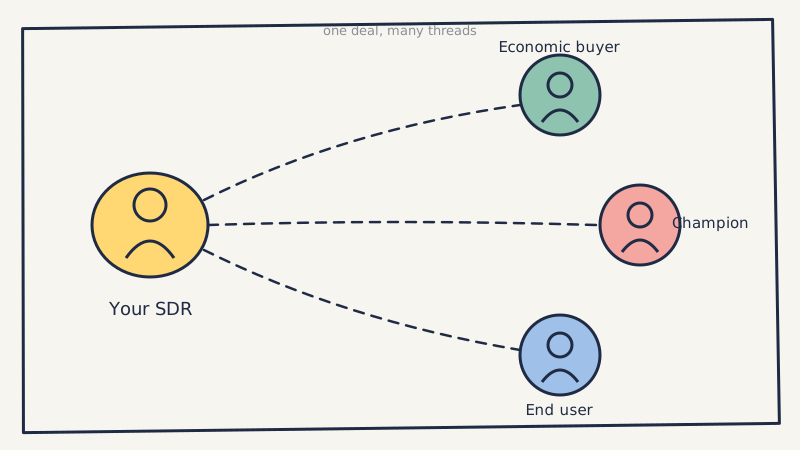
Most outbound programs are optimized to book a meeting with one person. That is the wrong finish line. The average B2B purchase now involves six to ten people, and the deals that close are the ones where your account has relationships with several of them at once. When your entire opportunity depends on a single contact, you have built a business on one person’s inbox habits, calendar, and internal political capital. The day that person goes on leave, changes roles, or simply stops replying, the deal freezes.
Multithreading fixes that. It means running parallel conversations with multiple stakeholders inside the same account so that momentum survives any one person going dark. Most teams treat multithreading as something account executives do late in a deal. It works far better when it starts in outbound, before the first meeting is even booked. This post lays out how to build multithreading into your outbound motion from the first touch.
Why single-threaded deals quietly die
A single-threaded deal has one point of failure and several ways to fail. The contact loves your product but has no budget authority. The contact gets promoted and their replacement inherits a pipeline they did not build and feel no ownership over. The contact forwards your deck internally, it lands flat with a skeptic you never spoke to, and the objection gets raised in a room you were not in. You never find out why the deal died because your only source of information went silent.
The pattern shows up in your CRM as a cluster of opportunities stuck in the same stage with a last-activity date weeks old. If you audit your closed-lost deals and find that most of them had exactly one contact attached, you do not have a messaging problem. You have a threading problem. Fixing the email copy will not help. Reaching more of the buying committee will.
Map the committee before you write a single email
You cannot multithread an account you do not understand. Before the first send, sketch the buying committee for the account tier you are targeting. You are looking for four functional roles, and they matter more than exact job titles:
- The economic buyer controls the budget and signs off on spend. This is usually a director or VP whose priorities are measured in outcomes, not features.
- The champion feels the pain your product solves every day and will sell internally on your behalf. This person is your best friend inside the account, but they rarely hold the budget.
- The end user lives inside the workflow you are changing. If they hate the tool, adoption dies after the contract is signed and you lose the renewal.
- The blocker is whoever can say no: security, procurement, finance, or an incumbent vendor’s internal advocate. You want to find them early, not in the eleventh hour.
You will not always reach all four through cold outbound, and you do not need to. The goal is to enter the account through two or three doors instead of one so that at least one thread survives to the meeting. Build this map into your list before you load it into a sequence. That planning work is exactly the kind of pre-outbound rigor an experienced outsourced GTM partner like Vendisys brings to every account, rather than spraying one persona and hoping.
Sequence stakeholders in parallel, not one after another
The instinct is to start with the champion, get a warm intro, and work up the ladder. That is too slow and too fragile. By the time the champion decides whether to introduce you upward, weeks have passed and the economic buyer has never heard your name.
Instead, run parallel sequences into the account with role-specific messaging. Each stakeholder gets a different value proposition tied to what they actually care about:
- The economic buyer hears about business outcomes: pipeline created, cost per meeting, payback period.
- The champion hears about the daily grind you remove and the internal win you help them claim.
- The end user hears about the specific workflow friction that disappears.
The messages reference the same product and the same account, but they are not copies of each other. A VP of Sales and an SDR do not respond to the same subject line. When you do land a reply from one thread, you can reference it in the others: “I have been comparing notes with a few folks on your team about how outbound gets routed today.” That signals you are already inside the account, which raises your credibility with everyone else you have emailed.
Make it easy for your champion to spread internally
Your champion is the highest-leverage thread you have, because they multithread for you inside the building where you have no access. But a champion armed with nothing but your pitch deck is not equipped to sell on your behalf. Give them internal-ready assets: a one-paragraph summary they can paste into Slack, a short comparison against the incumbent, and a clear articulation of the cost of doing nothing.
Then remove friction from the single most important next step, getting the group into a room. When a champion offers to loop in their director, do not reply with “let me know some times that work.” Send a ready-to-accept calendar invite the champion can forward in one click. Tools built for frictionless meeting booking like Kali turn a vague “I will check with the team” into a confirmed slot on three calendars, which is where multithreaded deals actually gain momentum. Every extra step you ask your champion to take is a chance for the thread to snap.
Keep the threads clean and connected
Multithreading multiplies your surface area, and that only helps if the underlying data holds up. Running three sequences into one account with stale or invalid contact records produces bounces, hits the wrong people, and can damage your sender reputation across the whole domain. Before you launch parallel threads, verify the addresses so your multithreaded push does not turn into a deliverability problem. Running your committee list through an email validation layer like Scrubby keeps bounce rates low and protects the domains you are sending from, which matters even more when you are hitting several inboxes at the same company in the same week.
Just as important is keeping the human side coordinated. If three of your reps email three stakeholders at the same account with no shared notes, you look disorganized instead of thorough. One person should own the account and see every thread. Log which stakeholder maps to which role, what each one has heard, and where each thread stands, so the story stays consistent no matter who replies first.
Measure threading, not just meetings
If you want multithreading to stick, you have to measure it. Add two numbers to your pipeline review. First, contacts per opportunity: how many distinct stakeholders are engaged in each open deal. Second, the share of deals that are multithreaded versus single-threaded at each stage. Teams that track these numbers almost always find their win rate climbs with contacts per opportunity, and that single-threaded deals convert far worse than the account average.
Set a floor. A reasonable target is at least two engaged contacts before an opportunity is allowed to advance past the first meeting, and at least three before it reaches proposal. Deals that fall below the floor get a threading task, not a hopeful follow-up to the same quiet inbox. When you make threading a stage requirement instead of a nice-to-have, your reps start entering accounts through multiple doors by default.
Start threading before the meeting, not after
The reason multithreading fails at most companies is timing. It gets treated as a rescue tactic once a deal is already stalling, when the honest truth is that the deal stalled because it was single-threaded from the first cold email. Build the committee map into your list, run role-specific sequences in parallel, arm your champion to spread you internally, keep the data and coordination clean, and measure contacts per opportunity as seriously as you measure meetings booked.
Do that, and a contact going quiet stops being a deal-killer. It becomes one thread out of several, and the account keeps moving. If you would rather not build this motion in-house, an outsourced outbound team like Vendisys runs multithreaded sequencing as the default, so your pipeline is never one silent inbox away from stalling.