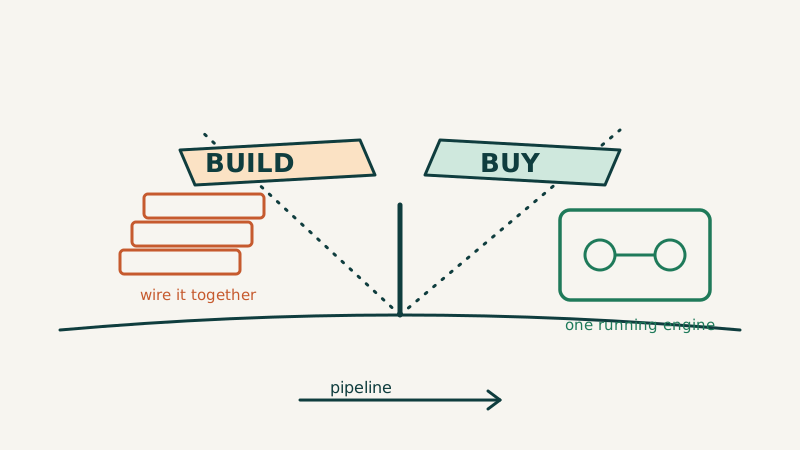
Hiring an outsourced GTM partner looks like a procurement decision. It is not. It is an operational hire that sits inside your revenue engine and either accelerates pipeline or blows up your sender reputation, your CRM, and your sales team’s confidence in marketing. The contract you sign quietly determines which of those outcomes you get.
Most evaluations focus on price, headcount, and case studies. Those are the easy questions, and they are also the questions that any agency can prepare for. The harder questions, the ones that actually predict whether the engagement will work, get asked too late or not at all.
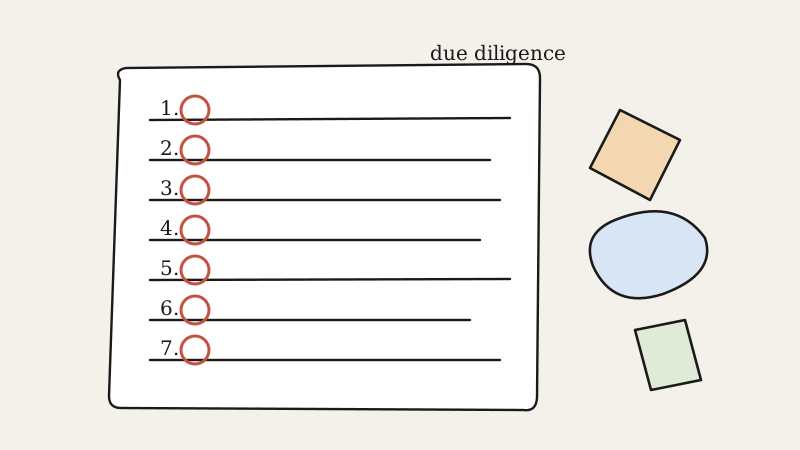
Here are seven we have learned to ask first.
1. Who is on the team I am buying, and what is the manager-to-IC ratio?
A polished pitch deck rarely matches the team that runs your account. Ask for named ICs and their tenure. Ask how many accounts each SDR or strategist runs in parallel. A ratio of one manager to ten ICs sounds efficient on a spreadsheet and looks awful on month three when QA, training, and account-specific iteration all collapse onto the same overworked lead.
If the agency cannot tell you, in the sales cycle, the exact people who will work on your account, you are buying a brand, not a team.
2. What does your data infrastructure look like, and who owns it during the engagement?
Outbound is data-bound. The agency’s lead lists, intent signals, deliverability stack, and CRM hygiene determine whether the campaigns work. Two questions inside this question:
- What sources feed the lead lists, and how is data freshness validated? List rot is real, and a partner that cannot explain how they handle it will leak deliverability inside thirty days.
- What happens to the data when the engagement ends? You want it documented up front. Most agencies will not give you a clean answer because the answer is “we keep it.” That is a problem if you ever want to bring outbound in-house or switch partners.
A serious partner will explain how they validate emails before sending, often using a tool like Scrubby, and will commit in writing to handing over the working list at the end of the contract.
3. How do you decide what gets tested, and how fast does the iteration cycle move?
Bad agencies test nothing and report on volume. Good agencies test segments, subject lines, sequences, and channels every two to four weeks and tie those tests to a clear hypothesis. Great agencies show you the test backlog and the kill criteria before you sign.
Ask for a recent test plan from a comparable account (anonymized). If the answer is “we just keep sending and tweak as we go,” you have your answer.
4. What is your sender infrastructure, and how do you isolate my domain reputation?
This is the question that filters spray-and-pray operators out fastest. The right answers include:
- Each client gets its own sending domains and subdomains, never a shared pool that ties your reputation to other tenants.
- DKIM, SPF, DMARC, and BIMI are configured per-domain with documented records you control or at minimum can audit.
- Warmup is staged over weeks before the first campaign hits scale.
- Bounce and complaint thresholds trigger automated throttling, not a Friday-afternoon Slack thread.
If the agency uses one giant Smartlead or Instantly account across clients, your reputation is collateral damage waiting to happen.
5. How do meetings and replies actually flow back to my sales team, and what does the handoff look like?
A booked meeting is a leading indicator. The lagging indicator that matters is whether your AEs walk into those meetings prepared and convert them. Ask for the handoff schema:
- What context fields come with every booked meeting (account, role, intent signal, prior touches, objections raised)?
- How fast does the agency respond when a prospect replies? A 24-hour response window kills momentum on intent.
- Who handles ambiguous replies, the agency or your team?
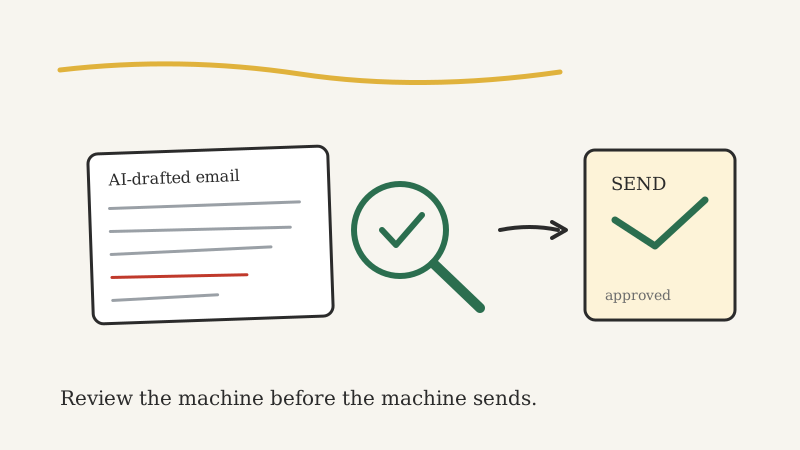
Tools like Underfive automate parts of the reply workflow and let agency-side reps focus on the conversations that need a human. If your prospective partner does not have a clear answer for sub-hour response handling, expect to lose meetings to slow follow-up.
6. How do you set, measure, and renegotiate goals?
Watch for the answer “we will agree on KPIs in onboarding.” That is the wrong answer. The right one looks like this: a written commit on month-by-month meeting volume targets, a definition of qualified meeting that both parties signed, a quarterly review where targets get raised or the contract gets restructured, and a cancellation clause that both sides can pull if metrics miss for two consecutive months.
If the agency cannot show you a sample SLA from a current client, they probably do not have one.
7. What is your competitive intelligence loop, and how does it shape outreach?
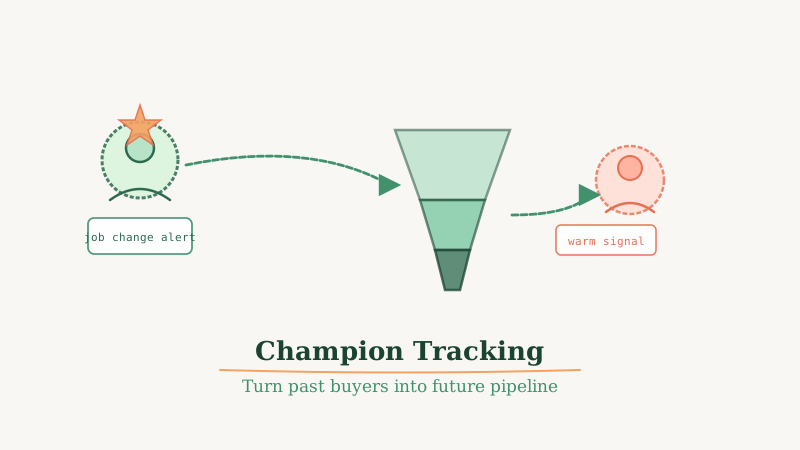
The best outbound is contextual. The agency should be tracking your competitors’ messaging, hiring, content, and customer signals and feeding that intelligence into outreach in near real time. If a competitor lays off their CS team, your AEs should be talking to that competitor’s accounts within the week.
Ask how they monitor competitive movement. A serious answer involves automated tools like CAM for competitor monitoring and a documented process for translating signals into talking points. A vague answer about “we keep an eye on the market” means it is not happening.
What this looks like when it works
A correctly chosen outsourced GTM partner runs alongside your team like a senior in-house function. The team is named, the data is documented, the testing cadence is visible, the sender reputation is protected, the handoff is fast, the goals are written, and the competitive intelligence flows both ways. The contract feels like a hire, not a purchase.
When the answers to these seven questions come back vague or evasive, the agency is selling you a logo on a slide and not a revenue function. The cost of that mismatch is rarely just the monthly fee. It is the quarter of pipeline you lose before you realize the problem and have to start the search over.
Get the questions right at the front of the cycle, and the rest of the engagement gets dramatically easier.